

Global Adventures in Mental Toughness, with Rob Lilwall – Episode 127 of The Action Catalyst Podcast
- Posted by Action Catalyst
- On February 3, 2016
- 0 Comments
- adventure, attitude, author, explorer, extreme traveler, how to take risks, mindset, motivation, risk, speaker
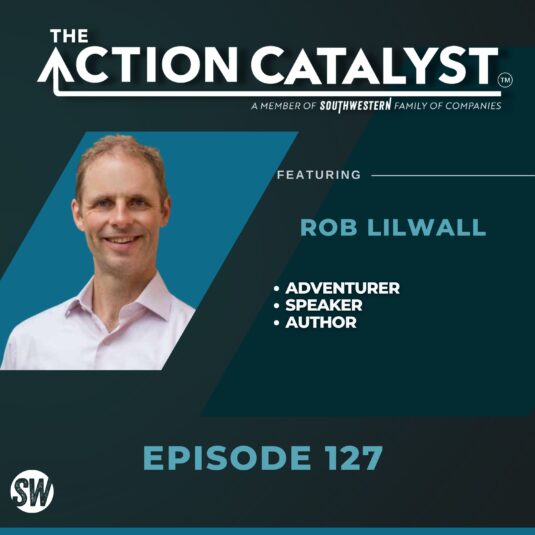
Speaker, author, and adventurer Rob Lilwall shares hard-earned lessons from decades of outrageous expeditions, including tips on assessing risk, why there’s more fear in anticipation than execution, having the attitude of adventure, and the mental importance of forward momentum.
About Rob:
Rob Lilwall is a motivational keynote speaker with a passion for adventure. Originally from the UK, he has spent over 14 years living in Asia, primarily in Singapore and Hong Kong. His career began as a geography teacher in Oxfordshire, but a bold decision to embark on his first major expedition changed the trajectory of his life. This journey sparked a career in adventure, leading to acclaimed books, appearances in TV shows, and a global reputation as a motivational keynote speaker.
Rob now inspires audiences around the world with his unique ability to connect personal growth, resilience, and adaptability with practical strategies for overcoming challenges.
Rob has delivered motivational keynote speeches at corporate and business events in over 20 countries and 50 cities across four continents. Known for his authentic speaking style, Rob connects with audiences as an ordinary person who has faced fear, self-doubt, and the overwhelming nature of big challenges. Through his adventures, he has learned how to embrace challenges, foster a growth mindset, push through obstacles, and adapt to rapidly changing environments with agility.
Learn more at RobLilwall.com.
The Action Catalyst is presented by the Southwestern Family of Companies. With each episode, the podcast features some of the nation’s top thought leaders and experts, sharing meaningful tips and advice. Learn more at TheActionCatalyst.com, subscribe below or wherever you listen to podcasts, and be sure to leave a rating and review!
LISTEN:
SUBSCRIBE TO OUR RSS FEED: https://feeds.captivate.fm/the-action-catalyst/
SUBSCRIBE ELSEWHERE: https://the-action-catalyst.captivate.fm/listen
__________________________________________________________________________
(Transcribed using A.I. / May include errors):
Host
Rob Lilwall, this man that you’re about to hear from, is incredible. Rob is an adventurer, and he has, over the last two decades, embarked on some major expeditions by bicycle and on foot, covering over 80,000 kilometers, almost 50,000 miles. And he’s just developed a real ground level appreciation and love for humanity and understanding of some really amazing lessons of persistence and thing that you can hear about. And anyways, Rob, thanks for being here.
Rob Lilwall
Hey, it’s great to be here.
Host
So tell us a little bit of the kind of adventures that you have have been on.
Rob Lilwall
Well, I’ve been on a lot of shorter expeditions and a few really, really big ones. The biggest one was a bicycle expedition. Before I did that, I was actually a high school geography teacher, but then one day, I decided, instead of teaching geography High School, maybe I should just go and learn more about the world firsthand. So I took my bicycle. But instead of setting off from England and cycling off into the world, I thought it would be more fun if I started as far away from home as possible and cycled back again. So I bought myself a one way plane ticket to North East Siberia, and then got off the plane, took my bike, started cycling. Eventually, it took me just over three years to get back home all sorts of crazy adventures on the way, things like camping at miners 40 in the Russian winter, and then I went down to Papua, New Guinea, and I got lost in the jungle. I went through Tibet in winter, Afghanistan, and eventually got home. So that was that was a completely life changing experience. And after that, I’ve done a number of other expeditions. I walked across the Gobi Desert to my home in Hong Kong, and lots of other things, been a real privilege and life changing, yeah, in all sorts of ways. And then I’ve surprised myself a lot. I don’t think I thought I would end up doing that sort of thing.
Host
So you literally just bought a plane ticket and took your bicycle and then just started pedaling?
Rob Lilwall
More or less, yeah, I took months to get ready, and I was with a friend for the first few months of that expedition. But basically I was, I had my long term goal of getting back to England, and the rest of it I was making up as I went along. So it was that mixture of just being determined to keep going, but needing to innovate a lot as I went. I mean, on that expedition, the first it was, the first three months were in the Russian winter. I think for me, the real the lowest lowest point. There are two types of low point. One type of low point is just the pain, painful, frightening spur of the moment experiences like getting out of your tent when it’s minus 40 and your hands and feet going on instantly, and you’re just like, Ah, this is like a terrible, painful experience. The pain doesn’t last. You keep going and it gets better again. So those are kind of the easier, difficult experiences. I think the hardest ones for me is, is the fear, the anticipation just before you go to a really, really scary place. So just before I was setting off into the Russian winter, and you start imagining yourself freezing to death in your tent, or just before I went into Afghanistan, obviously, you start worrying just before I went into Papua New Guinea, and everyone was telling me I would die and and those experiences the few nights before, when you wake up and you’re imagining the horrors ahead, those are much worse than when you’re actually there, trying to figure out, right, I’ve got to get warm, or I’ve just got to keep moving. Though, funnily enough, I find I think now, when I look back on those really tough times, those are some of my best memories, strangely enough, like thinking, Oh, wow, in Russia, that was really hard, but such a such a beautiful place, and it was so cool. Just stretching myself to the limits, if you keep moving, you actually stay quite warm like that. It’s actually, it’s not rocket science to stay warm at minus 40 if you’re wearing don’t even need to wear a lot of clothes, just like a decent coat, decent clothes. You’ve got to be quite aware of things like not overheating, because if you move too fast, you overheat, and then you sweat. And if you sweat it minus 40, your sweat starts freeze, freezes, kind of as a layer between maybe your base layer and your coat. You get this layer of ice, but the fabrics don’t really breathe. Then you get in your tent at night, and you’ve got all this melting ice on you, and then you get cold in your sleeping bag. So you’ve got to use your brain. It’s, it’s, not about just sort of gritting your teeth, but then I think the real dangers are probably the ones which you can’t really control. I think it’s easy. When people hear about these crazy expeditions, they start thinking about those kind of dangers which just you can’t control, like getting robbed. Jobs, I was robbed twice on the expedition, once at gunpoint, or meeting a dangerous animal, like getting bitten by a snake or something like that. And very occasionally, I did meet those uncontrollable dangers, which just come along and incredibly terrifying and dangerous when you you know, when you see a snake nearby, or somebody pulls the gun on you, that is super scary, but actually I think far more likely. I had to think, I had to try to be with my risk taking. I had to really try and be objective, as objective as possible about the risks. And I had to think, what’s the most likely thing to actually happen, and with cycling, especially cycling now cycling a lot of time on busy roads, and actually, statistically, the biggest danger was probably just some very nice person driving along in their car, checking their emails while they were driving and hitting me. Statistically, that was far more likely than somebody shooting me or something, which was incredibly unlikely overall. So I had to really try and keep the different risks in perspective and things like somebody driving and hitting me by accident, that was something I couldn’t control. And I had to really well I could control it in so far as I tried to cycle on the safer roads.
Host
What all does it take to pull off one of these expeditions, like in terms of the preparation and what do you bring?
Rob Lilwall
Well, it’s kind of going on a three year or six month expedition. You don’t bring that different stuff to if you were on just a week long expedition, you know, if you’re just cycling across Tennessee for the weather, you take your tent, you take your stove, you take your clothes, you take a few luxuries, like your Kindle and your camera and you’re something to listen to music on, and your toolkit and your first aid kit and your map, and you’re good to go and on a really long expedition, it’s actually not very different. You probably start thinking more carefully. Do I really need to take this? And then as you go on longer, you start accumulating more and more odds and ends you don’t need. And every now and again, you have to purge your kit and try and get to a lighter, lighter weight again.
Host
What are some of the big lessons, I guess, that you’ve taken away that you think kind of help you more in, like your everyday life?
Rob Lilwall
Well, I think sometimes when people hear about these expeditions, they or certainly before they’ve met me, they think I must be some kind of fearless ex Special Forces kind of superhero. And then they meet me, and they say, I’m just a really ordinary guy. I’m not very strong. I get frightened of things pretty easily. I’m not particularly clever. I’m just very ordinary, middle of the road kind of guy. And, you know, standing up, giving speeches and stuff. I still get terrified doing that sort of thing. But I think what I figured out, sort of intuitively along the way on these expeditions, is that it wasn’t I wasn’t going to get through all these obstacles and things through being super tough. It was more about having the right mindset, what I call the attitudes of adventure, which is just approaching the challenges with the right mindset, the right principles, and that was really what was key to getting me through things, and that would include things like when I did have an obstacle in front of me, not to just sort of sit down and just ruminate on what a big problem it was, but to think of it as a challenge that I if I applied myself, I could figure out a way through it. Things like being very clear about my my long term goal of trying to what, get to where I was going, but then breaking that down into shorter goals that really helped me to keep going a practicing self care, which was, although, you know, on an expedition, you’re pushing yourself hard, day after day after day, when I had the chance, I would try and take a day off, because it’s so important. When you’re pushing yourself hard, you also look after yourself, or eventually you lose your good judgment, you just get too exhausted to perform well. It’s easy to think a lot of these expeditions I’ve been on my own, but I always say, although I was alone, I couldn’t make it on my own, and I was constantly having to meet new people, ask them for advice, ask them for help. And that was actually, I think, what that was probably, you know, the real, the best and most beautiful thing I experienced on these trips was just meeting the local people in these far flung places who so often, whether it was a gold miner in Russia or a bike mechanic in Iran or wherever I was, total strangers would invite me in. They’d insist on having me to stay. They’d feed me. They’d look after me. And there was so much kindness out there. I just, I couldn’t, you know, I had to remember, I don’t have to make it on my own. And it was a wonderful experience. And I think it does apply. You know, reflects a lot on this, how it applies to normal life, but I think all those things I’m mentioning, which you need to get through an expedition, that those attitudes make such a difference in in life, including self discipline, because that’s key on an expedition. You know, you’ve got to be disciplined to do that, or you’re going to. Slipped behind schedule and all sorts of other problems, right?
Host
You mentioned a little bit about calculating the risks. Can you kind of walk me through some of that, like, what are some of the examples of the risks that you were up against? What are some of the things that you try to do when you’re evaluating risks?
Rob Lilwall
Yeah, I think all of these, again, all of these different attitudes sort of feed in to help each other. So I think it’s good, if possible, to be thinking about risks and calculating what risks to take when you’re in a good state of mind, isn’t it? It’s like if you’re you know, if you’re in the office and you’ve been working your 100 hour weeks and you’re completely exhausted and you haven’t spent any time with your family, and you know you’re under pressure from all sides. That’s not a good place to be making big decisions from, is it? And it’s the same on Expedition I would try to before I was approaching a really difficult place, I’d try and have a week, week off to do some planning, get myself in a good space, or I could was in a place where I could think about it and calculate the risks. That’s not always possible, but if it is, obviously it’s a good thing. And then other things, like, remember, we don’t have to make it on our own. Finding the best possible advice, getting hold of people like, before I went to Afghanistan, I didn’t just read the news websites about the latest bad things that were happening there. I managed through some friends of friends, to get in touch with people who were living and working there. And I asked people who were actually on the ground, you know, is the whole of Afghanistan dangerous, or is it just some parts which are dangerous? They replied, and they said, well, the whole of Afghanistan is dangerous. Some parts are especially dangerous, but some parts are quite a lot less dangerous and a lot more stable, especially in daylight. So if you’re going anywhere, go there, and so I was able to talk to the best people, and I think that’s key to risk taking, is getting some confidence about the risks we might take through finding the right people to talk to, and that includes having great mentors, and you know, I’m really proactive in life now about finding a good mentor. I’ve got a great coach. I think that’s so worth it, isn’t it? When you’re making a difficult decision, which involves a bit of risk, to get great mentors and coaches and people who know what they’re talking about to help you make that decision, and it can also give you the courage, once you’ve done your research, to actually go ahead and take it.
Host
Yeah, so where do you want people to go to learn more about you? How can people connect with you, Rob?
Rob Lilwall
Yeah, they can go to my website, which is just rob Lil wall.com, and they can get in touch with me through that. I’m based in Hong Kong, so a lot of the work I do is in Asia and Australia, but I’m sometimes I’m in Europe, sometimes I’m in America too. So we’d love to hear from anyone, yeah, just, I suppose I’m just really trying to, I think whatever we do in life, we can see it either as this great adventure, or we can see it as this misadventure. And that can really get us into a bad place in our heads, and we’ve got to whatever I’m doing, whether it’s out on an expedition or just working away on the day jobs, treat it all like an adventure.
Host
I love that, my friend. Well, the last little thing I want to ask you, just to put you on the spot, is, if there’s somebody out there who’s listening and they’re going through their moment of what feels like being completely alone. What message would you give to that person that is going through one of those moments right now?
Rob Lilwall
I think, I mean, there’s a lot to be said in just in trying to remember that. You know, if you can’t, if you keep going forward, things will improve again. You know, however hard it is, keep going forward, and that that experience you’re in is not going to it feels like it will last forever, but it really won’t keep going forward, and you’ll get to a better place again and reach out to people don’t, don’t try and go through really tough times alone, be vulnerable with people around you and with the people you trust, and that can again, be a huge, huge support to help you through a tough time. And you know, you will come out of it in a stronger place if you keep going through it.
Host
Well, keep pushing the limits and keep bringing principles that inspire people. All the best to you.
Rob Lilwall
Thank you so much. Really great to talk to you.
0 Comments