
I Bottled My Mother, with Monica Nassif – Episode 505 of The Action Catalyst Podcast
- Posted by Action Catalyst
- On July 7, 2026
- 0 Comments
- author, bravery, Business, disruption, entrepreneur, leadership, risk, startup, Stephanie Maas, success
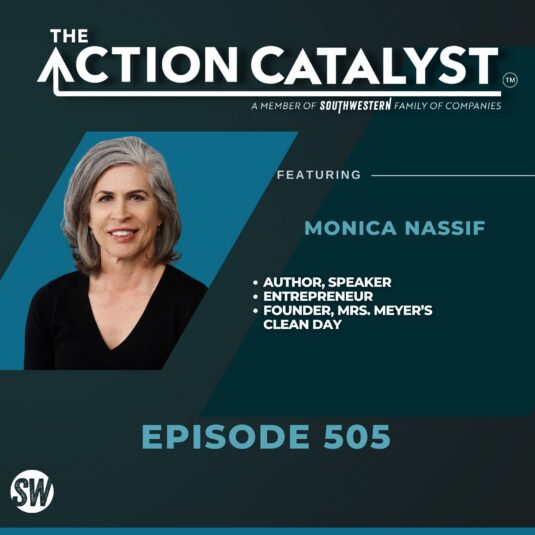
Monica Nassif, founder of Mrs. Meyer’s Clean Day and Caldrea, reveals hard‑earned lessons on entrepreneurship, leadership, and building a successful consumer brand from the ground up. Nassif emphasizes the importance of simplicity, resilience, and belief—highlighted through her “plant, water, weed, believe” philosophy—as well as the mindset that failure is simply learning. She explains how successful entrepreneurs must commit fully, embrace risk, and develop bravery over time while pairing self-awareness with a big, disruptive business idea. The conversation explores key startup principles including preparation, market research, financial discipline, and having “skin in the game,” along with practical advice on raising capital, overcoming fear, and executing with urgency when opportunity strikes, as well as the value of creativity, hard work, and perseverance as essential “superpowers”.
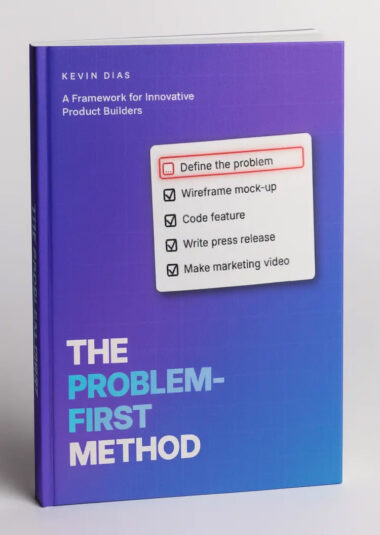
This episode is presented by Kevin Dias and “The Problem-First Method”. Learn more or get the book at Problem-First-Method.com.
About Monica:
Monica Nassif is a founder, entrepreneur, brand builder, and motivational speaker known for pioneering success in the consumer household cleaning product market through her ventures including Mrs. Meyer’s Clean Day.
Fearless with a can-do, hands-on approach to running a business, Nassif launched four startups. Two succeeded and two flopped. Her most successful venture, the Mrs. Meyer’s Clean Day brand, completely revolutionized the $30 billion U.S. consumer market of household cleaning products. She created aromatherapeutic and earth-friendly products with a consistent fragrance and performance across all types of household cleaners—counter-top spray, dish soap, hand soap, laundry detergent and more.
Nassif built two brands in this new premium category: Caldrea and Mrs. Meyer’s Clean Day. She didn’t just build the Mrs. Meyer’s brand from scratch—Nassif bottled a legacy—her mother. The cult-like favorite cleaning line was inspired by Nassif’s real-life mom, Thelma Meyer: a whip-smart, no-nonsense Midwesterner who raised nine children with little more than elbow grease, commonsense and a garden full of vegetables. Nassif believes in the power of building authentic and authoritative brands to stand the test of time.
She sold her company to SC Johnson in 2008, and the Mrs. Meyer’s brand continues to thrive in the marketplace. To this day, Nassif inspires entrepreneurs and founders with her success story of hard work, perseverance and marketing savvy. She launched her career with Target Corporation in marketing communications as a speechwriter, editor and publicist. She continued her career by launching a marketing communications agency in Minneapolis called Kilter Incorporated. The agency served consumer product brands and retail companies, such as Target. During that time, she honed her talent for building beloved brands, a talent which carries on right up until today.
Learn more at MonicaNassif.com.
The Action Catalyst is presented by the Southwestern Family of Companies. With each episode, the podcast features some of the nation’s top thought leaders and experts, sharing meaningful tips and advice. Learn more at TheActionCatalyst.com, subscribe below or wherever you listen to podcasts, and be sure to leave a rating and review!
LISTEN:
SUBSCRIBE TO OUR RSS FEED: https://feeds.captivate.fm/the-action-catalyst/
SUBSCRIBE ELSEWHERE: https://the-action-catalyst.captivate.fm/listen
__________________________________________________________________________
(Transcribed using A.I. / May include errors):
Stephanie Maas
Thank you for being here. It is really cool to meet you.
Monica Nassif
Delighted.
Stephanie Maas
So I was watching a show, and I don’t watch a ton of TV, but they were using your products.
Monica Nassif
Oh yeah, it’s on so many shows. When we first got started, we used to pitch all the publicists in LA to get stylists, and now I saw it on shrinking, just like a couple months ago, but I see it on a lot of shows and movies. No, I love it. Every time I see it, I get all excited.
Stephanie Maas
Okay. First question, the children’s book you give everybody when they come to work with you. What is it? Tell me about that.
Monica Nassif
Sure, I try to keep business super simple, so everybody who joined me in the early stages, I gave them a copy of The Carrot Seed by Ruth Kraus. And then, if you know the story, this little boy plants a carrot seed, everybody tells him it’s not going to come up, it’s not going to come up. He keeps watering and weeding. His parents say it’s not come up. His brother tells him, others, neighbors tell him it’s not going to come up. And at the end, a big huge carrot pops up, and he totes it away in his wheelchair. So, I would give everybody a copy of that book, and I would put on a little scrap of paper the mrs. Meyer’s business plan: plant seed, water, weed, believe. So that’s what I gave to all of our employees when they started.
Stephanie Maas
Just curious, why do you read a lot of children’s books?
Monica Nassif
I have four grandkids. I read to my daughter. I have two daughters. I read to them constantly. There’s a lot of lessons in children’s books.
Stephanie Maas
Yeah, it’s like children’s cartoons are kind of meant for kids, but yet as an adult you get a lot out of it.
Monica Nassif
Yeah.
Stephanie Maas
Okay. The lucky ladybug.
Monica Nassif
Ladybug, you know, I’m a big believer in, you know, that old saying, the harder you work, the luckier you get. And I kind of think of it that way too, but I think when you’re onto something and you send it out to the universe, that hey, I need help, or I think this is a good idea. I always thought of the lucky ladybug as sort of a symbol of its go time. So, when the universe opens her arms and you’re ready to run forward with your startup, you got to go. When you see a lucky ladybug in the course of your entrepreneurship journey, you got to run forward. Sometimes you get lucky, and goodness knows you need it.
Stephanie Maas
Was there any time that you can think through that was, you know, one of your key lucky ladybug moments?
Monica Nassif
Well, one time, even before I star ted Mrs. Myers and Caldrea, I had a Bachelor of Science degree, and then I became a surgical intensive care nurse. Well, I was miscast for that, so I was picking up my English degree, and I went to my English advisor, and I said, “Okay, here I am, a 28 year old person with an English degree. I want to get into business. Help me. And she said, “Here’s an internship, and I’ll never forget her sliding across this internship across the table, and it was for Target. So that was when I changed my career. I really pivoted from nursing to I went into the communications office at Target, and that’s when I really got into consumer products and retail. So that was a moment where I asked for help the universe, and here comes an opportunity, and you just got to chase it, even though you thought, oh, I don’t, I won’t even have a chance, I’m so old to be an intern, never been in business, so that was one moment. Also, too, with mrs. Myers, you know that brand had a super stumbly, bubbly start, and it took us a while to kind of get it going, and then when we saw the opportunity that we could really expand, we just put everything behind it, money, talent, and really chase sales on that brand, so that’s kind of when you see an opening, especially in the highly competitive consumer marketplace, you got to run, run forward quickly.
Stephanie Maas
So, what counsel or advice would you get that was maybe part of your mindset that gave you the courage that gave you the okay, it’s we’re putting all of our eggs in this basket right now?
Monica Nassif
You know, what I think, a lot of it has to do with my childhood. I’ve been working since I’ve aged 10. My mother had this sort of devil-may-care attitude about life. Failure wasn’t in her vocabulary. She said, “I never thought of anything as failing, I just assumed it was learning. I mean, I had like a checkerboard of jobs, so I was never afraid to walk into, you know, I used to be a babysitter, I used to do farm work, I was a truck stop waitress, I was a secretary in the emergency room, I just done so many things that I never was afraid to walk into a room and ask for a job, you know, so I just thought, well, if this does. Work, I can get a job, that’s what I always told myself. So, I knew I could support myself, you know, that was most important, especially with a young family, that was really important. So, I guess a lot of trying brave things as a child, you know, my parents were very adventuresome, they didn’t have a lot of money, we had nine kids, but they loved to hike out west, and they didn’t know where they were going on a trail. It didn’t matter, like, come on, let’s go. We’ll, we’ll go up there, see what’s up there. If that doesn’t work, we’ll turn around, you know. It was never like, oh no, don’t go, don’t, don’t do that. I don’t ever remember thinking that as a child. It was like, let’s try this, that doesn’t work, we’ll try that.
Stephanie Maas
You know, that is so cool, because two things that I really hear there in again, we hear this often, but to really put it into practice, especially when you have responsibility, is it’s not failing, it’s learning, and the confidence of, hey, whatever happens, I’ll figure it out, because I know I can go to work. I think that is such a product of that generation that was really lost for a while. I do see it coming back. Interestingly enough, even though everybody loves to put down this next generation, I think that they’re rediscovering the value of hard work and what it really does for you, not just in a contribution to the society kind of world, but how it really fundamentally impacts you.
Monica Nassif
Oh, for sure. You know, my mom always said the confidence of a paycheck, the confidence of a paycheck, you know. You go out and get a job. I was never ever asked about my grades, not once. And I asked my mom when I was writing this book, I said, ‘Why did you ask me about my grades? She goes, ‘You know, I never cared about your grades. What I cared about was the studying, that if that was your goal to get straight A’s, you knew what to do to get straight A’s. I was not a straight A student.
Stephanie Maas
Okay. Turd strategy.
Monica Nassif
The turd strategy. So I used to sit on a board with a very grisly, seasoned entrepreneur, probably started eight businesses, and he was an independent board member, like I was, and he would come to the board meetings with his board pre-reads it marked up with three colors, red, yellow, and green, and he was so sharp he knew the numbers inside and out, and you couldn’t get anything by him, and he had a philosophy that when something went wrong, fix it and move on, and he always said, if you have to eat a turd, don’t nibble on it, and you know what, I never forgot that, because it’s very true. When you’re an entrepreneur and you have a lot of failures, you got to eat a lot of turds. Sad to say.
Stephanie Maas
I love it. You know, several of the things that keep people from being as successful as they probably could, the fear of failure, the confidence, and just knowing whatever happens, I’m going to work and figure it out. Hey, you know what? Things are going to go sideways. I’m going to have to sit down. It’s not going to feel good, but I’m going to eat my turd sandwich and just do it as fast as I can and move on to the next thing.
Monica Nassif
Exactly.
Stephanie Maas
Okay. If I did want to be an entrepreneur and I think I have a brand, what’s the first thing I do?
Monica Nassif
I think the first thing is people always go, how should I? And I think it’s, should you do it? You gotta look in the mirror and ask yourself, can you live with the following? Can you work alone? Can you work long hours? Do you have perseverance? How do you handle failure? Can you make decisions in the gray zone? It’s just what we just kind of talked about. If things go sideways, can you eat your turd and move on? Can you be politically humiliated? Because I mean, seriously, your friends will laugh at you. Your friends and relatives will think you’re crazy. Yeah, you should really do some self-awareness study, like, what am I really good at? What am I lousy at? Can I live through this? Do I have a powerful enough vision? You know what I see a lot with entrepreneurs, they come to me with this tiny little improvement. Nobody cares about a tiny little improvement. You have to disrupt, especially in the consumer world, you have to kind of disrupt the category. And so I see a lot of people. So that’s one thing. Know yourself, really ask yourself if you see an entrepreneur in the mirror, and then two, is your idea big enough for your ambitions? A lot of people think they’re going to bring me this tiny little thing and be a millionaire overnight. They’re not, they’re just not. And so ask yourself, if you want to start, start a small business in a small category, like let’s say you just want to be, do contract legal work. Okay, that’s cool, but don’t expect you’re going to be like a gazillionaire overnight. You’re just not so match your ambitions to your reality of your market size and your opportunity. And then you got to build a plan, you got to write a plan down, you got to do all the analysis, all the research. I never saw anyone without a plan, and I see so many people come to me without not even an executive summary, and they want me to do the heavy lifting. I’m not doing it. I’m not doing it. Get organized, get prepared. Now, come see me. I’m happy to help people. Help me, so I want to help people, but they come unprepared. I’m going to be honest.
Stephanie Maas
And I think when you say know yourself and match your opportunity to the ambition, the devil’s in the details. And if you’re not willing to sit down and write out that business plan and dive, I mean, that’s a reflection of, to me, it’s the difference between, oh, that’s a cool idea, and do I make this into my living?
Monica Nassif
There’s a lot of cool ideas. I mean, one guy came to me and showed me something, and I said, ‘When was the last time you went to a Target store? He goes, ‘I haven’t. I said, ‘Why are you here? Go do your homework, walk around a Target, a Walmart, a Costco, figure out your category. I’m not doing it.
Stephanie Maas
Yeah, there’s a perfect segue into, ‘Why do most people never start? How do you break from this? Is a cool idea, and I think we just touched on it a little bit too. I really want to devote myself to this. I think this it.
Monica Nassif
Well, I see a lot of people working kind of two to three jobs and think, oh, I’m going to start a business. Well, I have a firm believer in all eggs in one basket, and watch that basket, I’m all in or I’m all out, and I think that’s been a secret to my success, also probably to some of the failures I’ve had. I’ve gone too far in when I show the step back a little bit. I think people are one fear. So, how do you conquer your fear? And I think a lot of it has to do with, have you been brave your entire life? You know, you’re not just going to take a bravery pill at age 40 and go, oops, I can do it. You got to start training yourself to be brave, training yourself to be courageous. Try things you’ve never tried, because you know what, you’re going to find out that wasn’t so hard. I did it. That wasn’t so hard. I’m braver now. I think bravery is like a muscle, you know, it’s like working out. Train yourself to be brave, be the smartest person about that category, be smarter than anyone. If you’re going to go into household cleaning, you got to know the stats. Who are the players? Be smarter than anyone. Do your homework, and then start planting seeds. And what I mean by that is, start writing your business plan in the dark of the night, when you maybe you still got your other side gig going, that you’d support your family. So, when you’re ready to hit the go button, first of all, you know yourself, you’ve practiced being brave, you got a plan now. You can go, because you got to go raise money if it’s a big idea, and you can’t sit in front of an investor and look like you’re unprepared, and you’re not willing to go forward. You just get a bad rap in the community, and you’ll never raise money again. I’m going to give you a perfect example. I was raising money before LinkedIn, it was just so difficult to find anybody, usually older men, to invest in a consumer product during the tech boom, and I came in with my fake bottles of dish soap and laundry, and they just looked at me like I was like I’d lost the plot, so I wanted to see this guy, I had my business plan, I walked him through it, and someone said, “You got to see this guy, he was an early investor in the Nerf ball. He’s gonna love this. He loves consumer product deals. So I go see this guy, he’s this old crusty gentleman, smoking cigarette after cigarette. He listens to my entire pitch, and he goes, “Let me tell you something, I hate consumer deals. I just hate them. But you know what? I kind of like you. So I’m gonna go home, I’m gonna read this plan, and if I like it, I’m gonna call you Monday at 8am And he did, and he turned out to be my, to be my number one champion. He helped me redo my business plan, get my board organized. He was an ex-investment banker, he knew kind of how all the financing worked, and I think it’s because I was prepared, I knew my stuff, and I must have pitched confidently to him, and he was like, “Okay, I’m in”, but I took a chance. I mean, I didn’t know this guy from anyone.
Stephanie Maas
With that being said, the biggest mistake early-stage founders make, even if it’s before they launch?
Monica Nassif
They’re not prepared. They haven’t, they haven’t walked Target, they haven’t, you know, okay, I live in consumer land, they don’t know. Let’s just say you wanted to reinvent. I always use this example. Let’s just say you wanted to reinvent mustard. Well, that would mean like you never looked, stood at the, you know, the aisle with mustard and figured out how many SKUs, how many products at what price point per ounce, that you don’t know anything. You should know more than anyone. You should have so much research and so much knowledge that no one can kind of throw you off because you are going after this category, you know. It’d be like training for a marathon, and you didn’t train – makes no sense. You’re gonna fall, you know, fall over after a mile, right? This isn’t hard, it’s just.. it’s hard doing it, but it’s that’s why I try to keep business super simple. Either you’re going forward or you’re not. Any in between is usually failure.
Stephanie Maas
So, two year plan. What’s kind of the two year plan for handling the financial stress when you are launching a company?
Monica Nassif
Well, one thing is, don’t get yourself so personally leveraged, you know? If you have an idea in your mind and you can kind of see yourself two years out, start cutting back on your personal expenses, start squirreling away some money, make sure you’ve got some cushion, for you know, if you have a little 401 k or something, get ready, because usually how financing works is friends, and you’ve got to put some money in, friends and family, then you can go out to angel investors, then private equity, and or VC folks, so if. You sit in front of an investor. Here’s the, here’s the first question they’re going to ask you. What do you have in it? If you go zero, they’re like, me too. Yeah, why should I risk it when you have no skin in the gate? You have no skin in the game, so why am I in? You better be ready to answer that question, because you’ll get asked it. I had a guy come to me, he had this great idea, he wanted me to put in 100,000 and I said, well, what do you got in it? And he goes, “Nothing. He said, “I got 40,000 in savings, and I’m not putting it in there because they have kids, young kids. And I went, “I’m not in either. What do you want me to do? You obviously don’t believe in yourself. You don’t want to risk it, you know. So that’s one. Get prepared financially. So I knew I was going to get out of my consulting business eventually, so I started saving money, cutting down on expenses, and I saved enough to live for a year. My plan was I figured out if I worked for UPS, I drove the truck, I could make enough money to support my family. Now, at the time, my husband was working, but when I started, I had a young daughter with cancer, and she couldn’t be in daycare, so my husband became a stay-at-home dad. So then I was pushed off the cliff to start freelancing, writing, and doing marketing work really quickly. So, how I said, as you have to practice being brave, while I was pushed off the cliff being brave, learn to be brave on the way down. So, we started saving money, and then when I was ready to go, I thought, well, if it doesn’t work, I got a year I can, I can live on UPS and savings for a year and put money in the business.
Stephanie Maas
People confuse reckless with brave. Yeah, you are very smart, brave, and then that builds up your courage and bravery. I think that’s very meaningful, and it’s yet another self-awareness gut check. If you’re not willing to do all that, how important is this to you, really? And to your point, why should somebody else participate if you’re not?
Monica Nassif
Yeah, if you’re not in, I’m not in.
Stephanie Maas
Okay, I know we’re getting to the last five minutes. What else is on your heart or mind that you would want our listeners to know?
Monica Nassif
You know, what I think, if you’re passionate about something, start keeping track, but the other thing you should really focus on is what are you good at. You know, I think people, if they focus on their talents, they should know what their superpower is. You know, and so that if you marry your superpower with your ambition, wow, you could probably figure a lot out and add a dose of bravery, and you got something going, you know. I learned longer time. My superpower is creativity. I figured that no matter what happened to me, I could get a job, I could figure it out. You know, I’m not.. I always said I was never the smartest person in the room, but I could read and I could work hard. I could figure it out by reading and working hard. I’ll get myself out of this jam, because I got out of a lot of jams.
Stephanie Maas
To your earlier point, it’s not failing, it’s learning.
Monica Nassif
It’s learning.
Stephanie Maas
Super fun. Thank you so much for your time and being here.
Monica Nassif
Oh, thank you, it was fun.
0 Comments