
The Miracle Morning, with Hal Elrod – Episode 53 of The Action Catalyst Podcast
- Posted by Action Catalyst
- On August 13, 2014
- 0 Comments
- author, Business, inspiration, mindset, motivation, overcome adversity, personal development, productivity, routine, self-improvement, speaker, success
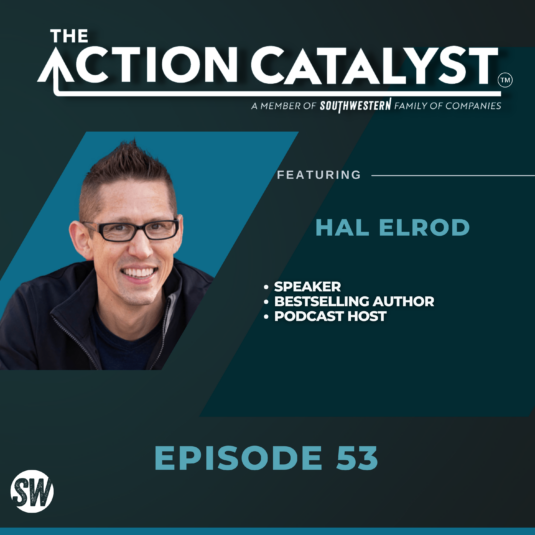
Hal Elrod, bestselling author of “The Miracle Morning”, shares the life‑changing philosophy behind his globally influential morning routine, recounts his extraordinary journey from being clinically dead after a head‑on collision with a drunk driver and weathering financial collapse, to overcoming the odds. Learn about the six core practices that help individuals improve health, income, mindset, and relationships, the snooze‑proof wake‑up strategy, a powerful morning routine speed-run for busy schedules, and why success is driven by who you become daily.
About Hal:
Hal Elrod is on a mission to elevate the consciousness of humanity, one person at a time. As an international keynote speaker, host of the popular Achieve Your Goals podcast, and author of one of the highest rated books in the world, The Miracle Morning, he is doing exactly that. Hal actually died at age 20. His car was hit head on by a drunk driver at over 70 miles per hour, he died for 6 minutes, broke 11 bones, suffered permanent brain damage and was told by doctors that he would never walk again.
Then, at age 37, he nearly died again when his heart, lungs, and kidneys were on the verge of failing, and he was diagnosed with a rare, aggressive form of cancer. After being given a 30% chance of surviving, Hal once again defied seemingly insurmountable odds to beat cancer. He is grateful to be sharing his life with his wife and their two children, in Austin, Texas. Hal’s miraculous journey is featured in his most recent project—The Miracle Morning movie—a documentary that shows you how to live to your full potential and highlights stories of ordinary people who are doing the extraordinary.
Learn more at HalElrod.com.
The Action Catalyst is presented by the Southwestern Family of Companies. With each episode, the podcast features some of the nation’s top thought leaders and experts, sharing meaningful tips and advice. Learn more at TheActionCatalyst.com, subscribe below or wherever you listen to podcasts, and be sure to leave a rating and review!
LISTEN:
SUBSCRIBE TO OUR RSS FEED: https://feeds.captivate.fm/the-action-catalyst/
SUBSCRIBE ELSEWHERE: https://the-action-catalyst.captivate.fm/listen
__________________________________________________________________________
(Transcribed using A.I. / May include errors):
Host
So the gentleman that you’re about to hear from, his name is Hal Elrod, literally came back from the dead, and he is the author of a best selling book called the Miracle Morning. Obviously, he’s a coach, speaks all over the place, and he has an incredible, incredible story. So Hal, thanks for being on the podcast.
Hal Elrod
I’m excited to be here.
Host
So can you just kind of tell us about the Miracle Morning, and can you just kind of give us a quick synopsis of what it’s about?
Hal Elrod
Yeah, yeah, man. And I will tell you I it’s this is, it’s a surprise to me. When I wrote the book, I had no idea that it would become this popular. And the premise is the idea that, look, if you want to take your life to the next level and change. You know, whether it’s your personal life, your professional life, health, whatever, you’ve got to change something that you do daily, right? That’s what I think John Maxwell said, that, that the secret to your success is changing something that you do daily. And what I through kind of research and hitting a rock bottom, which we can go into in a few minutes, I had hit a rock bottom. And really, after doing a little bit of research, I realized, wow, successful people wake up early, and I wasn’t a morning person. I was a snooze guy and hit the snooze button three times, five times, get out the door, rushed and hectic. And I realized, successful people wake up an hour or two before they have to be awake, and they work on themselves. In other words, they work on becoming, developing themselves, to become the person they need to be that can, they can really easily attract, create and sustain the levels of success that they want. And I wasn’t doing that, and so I started doing it. I created the most extraordinary personal development routine that I could ever imagine in the morning, and within two months, I had doubled my income. I got in the bed. I mean, just amazing things happened, and that’s what became the Miracle Morning. But I never intended it to become a book. It was just my was just my own thing. And and one thing led to another, and now it’s, you know, it’s, it’s being impacting people around the world in the same way it did for me.
Host
Yea, before we get into that, I want your story, because that’s the part that was really powerful to me. You’re 20 years old, you’re hit head on by a drunk driver at 70 miles an hour you’re found, you were literally found dead at the scene.
Hal Elrod
So at that time in my life, I’m 20 years old, I was a year and a half into a career in direct sales, and I had been real fortunate to have a really, you know, a brilliant mentor that guided me, and I ended up being one of the top sales reps in the history of the company. I’d broken all sorts of sales records and that sort of thing. And one night, I was asked to give a speech on, you know, kind of a motivational speech on what I was doing to be successful. And after the speech, I got my first standing ovation. So it’s kind of like a special moment. I had never gotten that before, and I was pretty excited. Got in my brand new Ford Mustang, which at age 20. It was like my dream car. I just bought it three weeks prior. It was a white Ford Mustang five speed driving on the freeway feel really feeling on top of the world, like my last memory from that night was just feeling so grateful and excited about how the night went in my life and everything else, and a man that I never met before left the bar after two beers, got on the freeway going the wrong direction. I don’t remember the headlights coming at me. I don’t remember what I was thinking. I don’t remember any of that, that actual occurrence, but I was hit head on at 70 miles an hour. You know, both of us were doing 70 miles an hour for 140 mile an hour impact. My car spun off, the drunk driver into oncoming traffic, and the car behind me hit me in my door at 70 miles an hour. So you can imagine sitting in your car and having a car run into your door at 70 miles an hour, full speed, I broke 11 bones instantaneously. I broke my leg in two pieces. My femur broke in half. My pelvis broke in three places. My arm broke in half. Behind the bicep, severed my ear. The bones around my eye were completely destroyed. It’s all rebuilt in metal now, and I was so crushed in the car that even when the ambulance and the fire department got there, you know, 15 minutes later, they couldn’t get me out. It took them an hour to cut me out of the car, and when they finally did, I had lost so much blood during that hour, you know, just being trapped in the car that I actually bled to death. And my heart stopped beating on the side of the freeway, and I was clinically dead for approximately six minutes, rushed to the hospital in a coma for six days. I had 11 surgeries repairing all the broken bones came out of the coma. The doctor said I would never walk again and and that I had suffered permanent brain damage. I had pretty much no short term memory, and that’s really the reality that I was faced with that, you know, to me, was my first rock bottom. It’s like, I can’t imagine life being being much worse than this, you know. So after the accident, the doctor said I would never walk again. And I told, you know, that my I didn’t tell the doctors, I didn’t want to get confrontational. But when the doctors left the room, you know, my parents were just crying. They were distraught, and I wasn’t. I said, Look, Mom and Dad. I said. Number one, the doctors are not experts in me. They might be experts in medicine. They’re not experts in me. And I said, and I’ve already decided, and this is like a week after I came out of my coma, I said, one of two options, either on the doctors, if they are correct and I’m never able to walk again, I’ve already decided that I’m at peace with it, and I’ll be the happiest person you’ve ever met in a wheelchair. And kind of funny. I did tell them, I said, Mom and Dad, remember, my dream was to be a motivational speaker. I go, you know, but you guys were so good to me. I don’t really have anything that, you know, I’ve ever had to overcome. So, you know, God, I wouldn’t have asked for this. But maybe that’s why this happened. I don’t know, right? And I said, the other option, though, is I’m going to walk again, and I’m putting all my energy, all my faith, all my prayer, all my, you know, all my I’m visualizing that I’m going to walk again. And a week later, the doctors came back with the X rays, and they said, how we don’t know how to explain this, but your body is healing. Miraculously, we’re going to let you take your first step in in therapy tomorrow. And I started walking again. I left the hospital. Four weeks later, I begged my dad to drive me to sales appointments, and I ended up, that year, I was one of the top sales reps again, with other people driving me to my appointments. Because of the brain damage, I couldn’t drive my car, so I kind of got back on track very quickly. I ended up being one of the youngest members of the Hall of Fame, and then I left my sales career after I hit the Hall of Fame and I launched a I wrote my first best selling book, taking life at on. I launched a coaching business, doing life coaching, sales coaching, you know, success coaching, that sort of thing. And I started my speaking career. And a few years into that, it was going phenomenal, and the US economy crashed, and like you can relate to in so many Americans the for me, I lost over half of my income. It felt like it was overnight. I mean, it really was, you know, it happened gradually over, like a six month period, but it was basically my clients couldn’t afford to pay me. You know, companies weren’t bringing in speakers at that point. They were really tight with their budgets, and I lost over half my income. I couldn’t pay my bills. I couldn’t pay the mortgage. I lost my house to the bank. I stopped exercising completely because I was in such fear and scarcity mode, trying to just wake up in the morning and figure out how to make some money or turn things around and the and I got deeply depressed. More depressed. I’ve never been so depressed in my life. Where I was I was suicidal. I didn’t want to get out of bed in the morning. I didn’t want to live I and it felt hopeless because it kept getting worse. I thought it was at the rock bottom. Then it got worse. Another client canceled, another creditor called, etc. And to keep a relatively long story short, after the six month downward spiral into depression and financial ruin and and you name it, physical, mentally, emotionally, spiritually, just kind of at the rock bottom. A conversation with a friend led to me going on a run, which I hated at this time. And on that run, I heard a quote from Jim Rohn that that changed my entire life, and it’s the basis of my life and the Miracle Morning now. And here’s the quote, your level of success will seldom exceed your level of personal development, because success is something you attract by the person you become. And I realized I’m not dedicating time every day to becoming the person that I need to be to to create the levels of success that I want. In other words, I want my life to improve, but I’m not dedicating time every day to myself improvement. And it’s like I knew that, like, you know, someone asked me, Hey, do you need to get better? To get, you know, make your life better? Should you get better first? I’d probably like, Yeah, but I wasn’t doing it, doing what you know you need to do. And so I decided I went home, I did some research, and I basically came up with the six most sworn by personal development practices, you know, by any expert or guru, meditation, Affirmations, Visualization, exercise, reading and journaling. And the next morning, I woke up and I did all six of them, from 5am to 6am which was crazy for me. I wasn’t a morning person, and two months later, my theory going into this was this could be the one thing that changes everything for me, but I had no idea how profound it would be. Two months later, I had more than doubled my income. I went from being in the worst shape of my life to training for a 52 mile ultra marathon, which I completed a few months later. And it was just to show that kind of show the doctors, you know, hey, tell me I can’t walk right and and my depression was gone within like 48 hours. So that’s, that’s the the kind of, the general idea of how the Miracle Morning was born, and now there’s 10s of 1000s of people around the world that you know that are losing weight, they’re increasing their income, they’re quitting smoking, they’re reading more, they’re improving their relationships, everything as a result of making sure they start every day in the optimum way.
Host
You say that you have this sort of five step, snooze proof wake up strategy. And can you just tell us what that is?
Hal Elrod
Yeah, it’s funny. It’s that is arguably the most important chapter in my book. But I never intended it to be, and I didn’t know it would be, and it’s the shortest chapter. And the reason is, you know, the Miracle Morning does a very good job of getting you to understand that the arguably the single most important improvement you can make in your life to improve your success. US is, is create that morning success ritual, and then it tells you what to do. You know, the six practices, how to do them, how long to do them, but without that middle piece of well, how do I get my butt out of bed? This book and the concept would have fallen flat on its face, because people would have read about, yeah, I was so inspired, and then I but I couldn’t get out of me. I tried and I failed, right? Because we’re all such snooze. So the five steps, news proof, wake up strategy, I’ll just give you, get your listeners a few of the most important steps. Number one, you’ve got to set your intentions before bed. On your last thought before you go to bed is almost always your first thought in the morning. Yeah, and that’s why, when you’re, you know, when I was a kid on Christmas, right? I went to bed excited. I couldn’t wait to wake up. It wasn’t hard to get out of bed in the morning because you went to bed with the right intentions. And I realized that we can recreate that every day. So that’s the first step, set your intention. Second step, move your alarm clock as far across the room as possible. If it’s by your bedside table, you’re going to make the wrong decision every time, because you’re half asleep when you’re making that decision. But if it’s across the room and you got to get out of bed now you’re half awake. Now it’s easy, and last but not least, make sure you drink a full glass of water first thing in the morning, because, by default, we’re all dehydrated, which creates fatigue. You’ve got to replenish that rehydrate first thing in the morning, so that it’s easy to wake up and you know, and make it an awesome day.
Host
I love it. You have this chapter in the Miracle Morning called the six minute miracle morning.
Hal Elrod
It sounds like eight minute abs or whatever, right? So it’s not, it almost sounds like, kind of like, Oh, is that just a gimmicky thing? What happened was, there were a lot of days when I was doing the Miracle Morning, and it’s something I created for myself. None of this was created to be a book. You know? It was just something that changed my life, and I felt the sense of responsibility to kind of pay it forward and share it. So I had a lot of days where I’d be like, Oh man, I don’t have time, right? Who amongst us doesn’t have that thought throughout every day, right? Oh, I really would love to do this, but I don’t have time. And there were a lot of days that happened with the Miracle Morning. So one day I did a 30 minute miracle morning instead of 60 Minutes. Like, wow, that’s just as powerful. And then one day I was like, Man, I don’t have time. I thought, wait a minute. What if I did a six minute miracle morning, one minute of meditation, when prayer, one minute of really focused affirmations, one minute of really focused visualization, one minute of jumping jacks, where I get my heart rate up and blood and oxygen to my brain. One minute of journaling what I’m grateful for. I went through one minute of a self help book right, the entire Miracle Morning in six minutes, and I did it. And here was the profound thing. It took 1/10 of the time, but I still got roughly 90% of the benefit. And so I don’t recommend, I don’t advocate, hey, do a six minute miracle morning every day, but I do. I put that in the book. It’s an important chapter, because it makes you realize there’s no excuse. I can everybody can fit that in. So for me, I do a six minute miracle morning probably twice a week, and then the rest of the week I do a full hour.
Host
Awesome. Well, how it’s just awesome. So keep doing what you’re doing, brother, we wish you the best.
Hal Elrod
Thank you so much.
0 Comments